If you have been in crypto for more than five minutes, you have probably heard the phrase not your keys not your coins. It is repeated so often that it starts to sound like a cliché. But after almost a decade in this space, I can tell you that this simple phrase is one of the most important lessons you will ever learn.
I have seen exchanges collapse overnight. I have seen people lose their funds because of hacks, bad wallets, or simple mistakes. And almost every time, the root cause was the same. They trusted someone else to hold their crypto.
That is where wallets come in.
In this article, I want to walk you through how crypto wallets actually work, what you should be looking for, and why I personally lean toward certain types of wallets. I will also show you a simple tool that can help you pick the right wallet for your needs.
In This Article
- What Is a Crypto Wallet Really
- Hot Wallets vs Cold Wallets
- Why Hardware Wallets Matter
- Why I Like Ellipal
- How to Choose the Right Wallet for You
- How the Crypto Wallet Finder Tool Helps
- Common Mistakes People Make With Wallets
- Your Wallet Is Your Foundation in Crypto
- Frequently Asked Questions
What Is a Crypto Wallet Really
A crypto wallet does not actually store your coins. This is one of the biggest misconceptions beginners have.
Your coins always live on the blockchain. What the wallet stores is your private keys. These keys are what give you control over your funds. Whoever controls the private keys controls the crypto.
There are two main categories of wallets.
Custodial wallets
These are wallets where someone else holds your keys. This usually means exchanges or certain apps. They are easy to use, but you are trusting a third party.
Non custodial wallets
These are wallets where you control the private keys. Hardware wallets and many software wallets fall into this category. This is where you truly own your crypto.
If you are serious about being in this space long term, you should eventually move toward a non custodial setup.
Hot Wallets vs Cold Wallets
You will also hear the terms hot wallet and cold wallet.
A hot wallet is connected to the internet. These are usually mobile apps, browser extensions, or desktop wallets. They are convenient and great for daily use, trading, and interacting with DeFi.
A cold wallet is not connected to the internet. This usually means a hardware wallet. These are physical devices that store your private keys offline.
Cold wallets are generally the safest option for long term storage.
Think of it like this.
A hot wallet is your everyday spending wallet.
A cold wallet is your savings account in a vault.
Planning to use MetaMask on a new EVM network? Follow this step-by-step guide to buying WHAT IF coin on Robinhood Chain, including how to add the network, bridge ETH and verify the correct token.
Why Hardware Wallets Matter
If you are holding any serious amount of crypto, a hardware wallet is not optional. It is essential. And as the industry evolves, it is also worth understanding whether current wallets are ready for future threats like quantum computing.
When you leave funds on an exchange, you are trusting that exchange to stay solvent, secure, and honest. History has shown us that this trust is often misplaced.
Hardware wallets remove that risk. They keep your private keys offline and under your control.
Over the years, I have tested and used several hardware wallets. Some are better for beginners. Some are better for advanced users. Some focus more on security, others on usability.
Right now, one of my personal favorites is Ellipal.
Why I Like Ellipal
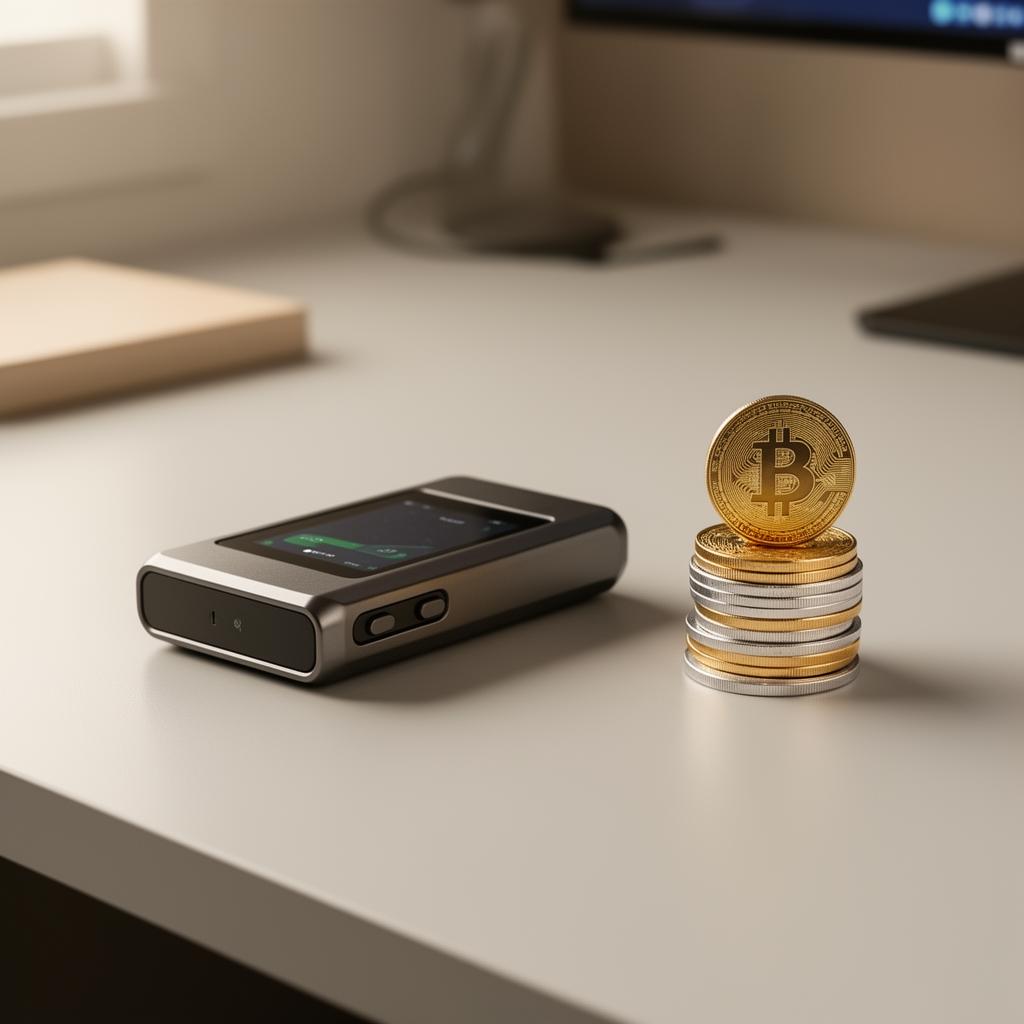
Ellipal stands out because of its fully air gapped design. That means the device never connects to the internet, Bluetooth, USB, or WiFi.
All transactions are signed using QR codes. This reduces the attack surface significantly compared to devices that connect via cables or wireless signals.
Here are a few reasons why I like it.
It is completely air gapped
The device never connects directly to a computer or phone.
Large touchscreen
The interface is easy to use and feels more like a smartphone than a tiny calculator.
Wide asset support
It supports a large number of coins and tokens across multiple chains.
Strong focus on security
The whole design philosophy is built around isolation and protection.
If someone asked me today for a solid hardware wallet with strong security and a user friendly experience, Ellipal would be at the top of my list.
That said, there is no single perfect wallet for everyone.
How to Choose the Right Wallet for You
The best wallet depends on your situation. Here are a few key questions to ask yourself.
Are you a long term investor or an active trader
Long term investors usually benefit more from hardware wallets.
Do you use DeFi and Web3 apps often
You might need a hot wallet for daily interactions, combined with a hardware wallet for storage.
Which blockchains do you use
Not all wallets support all chains. Some are better for Bitcoin. Others are focused on Ethereum or multi chain setups.
How important is ease of use to you
Some wallets are extremely secure but not very beginner friendly.
This is exactly why we built the Crypto Wallet Finder tool.
How the Crypto Wallet Finder Tool Helps
Instead of reading endless comparison articles or random forum opinions, the Crypto Wallet Finder gives you a more structured approach.
You simply answer a few questions about:
- Your experience level
- Your preferred chains
- Your security priorities
- How you plan to use your crypto
Based on your answers, the tool suggests wallets that actually fit your needs.
You can try it here:
The goal of the tool is not to push one specific wallet. It is to help you find the right wallet for your situation.
Read more about why I built the Wallet Picker and the thinking behind it.
Some people will end up with Ellipal.
Others might prefer Ledger, Tangem, or another option.
The point is to make the decision easier and more logical.
Common Mistakes People Make With Wallets
After years in crypto, I keep seeing the same mistakes.
Leaving all funds on exchanges
This is the most common and most dangerous mistake.
Not backing up the seed phrase properly
If you lose your seed phrase, you lose your crypto. There is no support ticket that can fix that.
Storing the seed phrase digitally
Screenshots, cloud storage, and email backups are all terrible ideas.
Using random unknown wallets
If a wallet looks sketchy, it probably is.
Rushing the setup process
Wallet setup is not something you should do in a hurry.
Take your time. Double check everything. Treat it like setting up a safe in your home.
Your Wallet Is Your Foundation in Crypto
Before you worry about trading strategies, indicators, or the next big altcoin, you need to get your wallet setup right.
Security comes first.
If you are not sure where to start, use the Crypto Wallet Picker tool to get a recommendation that fits your situation.
For more practical tools, explore the full guide to AI tools built for crypto investors.
If you want to go deeper into strategy, investing rules, and trading psychology, you can also check out:
Crypto is full of noise, hype, and shortcuts. But when it comes to wallets, there are no shortcuts.
Take control of your keys.
Choose the right tools.
And build your crypto journey on a solid foundation.
Frequently Asked Questions
What is the best type of crypto wallet for beginners?
For beginners, a hardware wallet is the safest option for storing crypto long term. Software wallets are convenient for small amounts and everyday use, but hardware wallets keep your private keys offline and protect against hacks, phishing, and exchange failures.
Do I need a hardware wallet if I am just starting in crypto?
If you hold any meaningful amount of crypto, yes. Many beginners keep funds on exchanges for convenience, but exchanges can be hacked or freeze withdrawals. A hardware wallet gives you full control of your assets from day one.
What is the safest crypto wallet setup in 2026?
The safest setup combines a reputable hardware wallet for long term storage with a trusted software wallet for smaller daily transactions. Using a seed phrase backup stored securely offline adds an additional layer of protection against loss or theft.
How do I choose between different hardware wallets?
Compare wallets based on the number of supported coins, ease of use, build quality, open source firmware, and whether the device has a secure element chip. The right choice depends on your technical comfort level and which cryptocurrencies you plan to store.
Can I use both a hardware and software wallet together?
Yes, and many experienced users do exactly that. A hardware wallet serves as your vault for long term holdings, while a software wallet handles everyday transactions and smaller amounts. This approach balances security with convenience.