
Summary
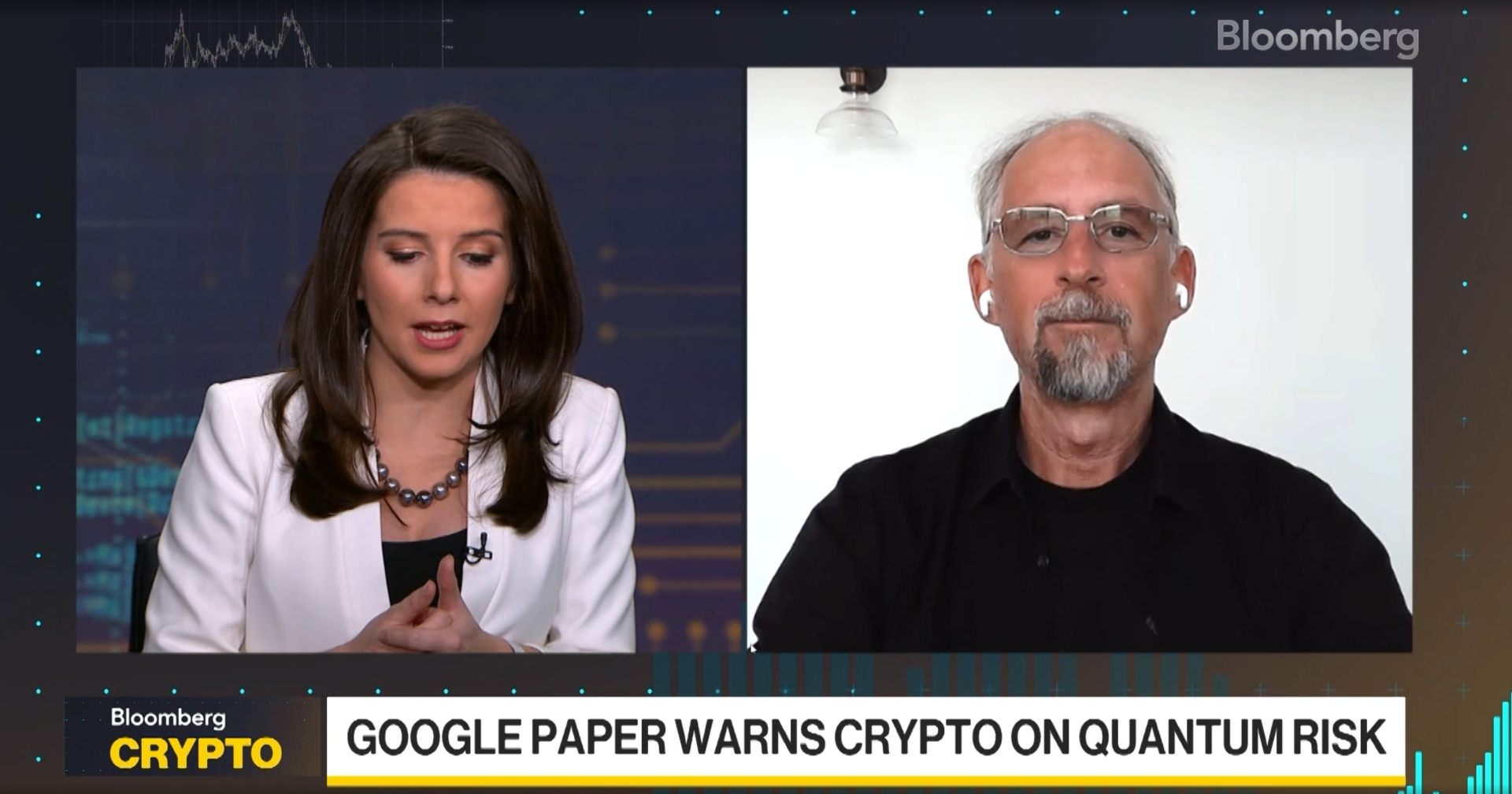
This article was partly informed by a podcast conversation with Shai (Deshe) Wyborski, a PhD in quantum cryptography, GhostDAG co-author, former proof of work researcher, and someone known to many readers from his work with Kaspa.
Quantum computing is one of those crypto topics that gets dismissed too quickly by one group and exaggerated too quickly by another. That is exactly why Bitcoin investors should take it seriously without becoming hysterical about it.
The honest answer is that Bitcoin is not facing an immediate collapse from quantum computers today. The hardware does not yet exist at the scale needed to break Bitcoin's elliptic curve cryptography in the real world. But that does not mean the problem is small. It means the timeline is uncertain, and uncertain risks are often the hardest to manage when millions of users, old wallets, hardware devices, exchanges, and social consensus all need to move in the same direction.
That is where this debate gets interesting. Adam Back's view is broadly that the threat is real but not imminent, and that Bitcoin has time to prepare. Critics argue that this framing is too comfortable because the real issue is not whether a quantum computer can break Bitcoin tomorrow morning. The real issue is whether Bitcoin can coordinate a clean migration before the threat becomes practical.
In other words, the biggest danger may not be quantum computing itself. It may be Bitcoin's slow, messy, politically difficult upgrade path.
Quick Answer
Bitcoin is not immediately unsafe from quantum computers, but it is not safe to ignore the risk either. If large scale quantum machines arrive sooner than expected, exposed public keys, old wallet formats, and slow migration could become a serious problem. Adam Back may be right that the threat is not imminent, but that does not automatically mean the current level of urgency is enough.
Direct Answer
Bitcoin's core cryptography is still secure against today's computers. The problem is that quantum computing is designed to attack the type of public key systems Bitcoin relies on for signatures.
That does not mean Bitcoin fails overnight. It means Bitcoin may need a long transition to post-quantum protections before the hardware arrives. That transition is complicated because not all wallets are equally exposed, not all users are active, and not all upgrades are easy to coordinate in Bitcoin.
So if you are asking whether Bitcoin is safe from quantum computers, the practical answer is this: safe for now, but not safe enough to stay complacent.
Why This Debate Matters Right Now
For years, the standard response to the quantum threat was simple. Yes, it matters in theory, but the machines are so far away that it is mostly an academic issue.
That line is getting harder to repeat with confidence.
The reason is not that somebody already built a quantum computer that can crack Bitcoin. They have not. The reason is that recent research keeps reducing the estimated resources needed for future attacks on elliptic curve cryptography. In plain English, the target may be getting closer even if the finish line has not been crossed.
That changes the conversation in a very important way.
Bitcoin does not need to prepare the day after quantum computers become dangerous. Bitcoin needs to prepare before that, because migration is not just a technical patch. It is a social process, a wallet process, an exchange process, a custody process, and a user education process.
And if you have been in crypto long enough, you already know how messy those processes can get.
| Scenario | Risk Level | Timeline | What It Means for Users |
|---|---|---|---|
| Current quantum hardware | Low | Today | No practical threat to Bitcoin signatures. Standard wallet security remains effective. |
| Near-term breakthroughs (1,000+ logical qubits) | Moderate | 5 to 10 years | Exposed public keys become a growing concern. Migration planning should be active. |
| Cryptographically relevant quantum computer | High | 10 to 20 years (uncertain) | Addresses with visible public keys are directly vulnerable. Full network migration required. |
| Delayed or failed migration | Critical | Depends on coordination | Dormant coins, old wallets, and inactive users face permanent loss if upgrades stall. |
What Adam Back Is Really Saying
Adam Back's position appeals to many Bitcoiners because it sounds rational and calm. The argument is basically this:
- quantum risk is real
- current hardware is still far from breaking Bitcoin
- panic is unhelpful
- Bitcoin has time to design and deploy a proper upgrade path
That is not an insane view. In fact, parts of it are obviously correct.
There is no evidence that Bitcoin is about to be broken this week. There is no reason for holders to think their coins are about to disappear tomorrow. And there is a very real danger in rushing weak or immature post-quantum schemes into Bitcoin just because fear is trending on social media.
That last point matters more than many people realize.
A bad security migration can create a new set of problems while trying to solve the old one. If Bitcoin adopted a post-quantum scheme too early, and that scheme later turned out to have flaws, the network could end up making a serious long term mistake. So the instinct to move carefully is not cowardice. It is part of responsible protocol design.
But here is the problem.
Careful is good. Comfortable is dangerous.
Where Adam Back May Be Underestimating the Risk
The strongest criticism of Adam Back's position is not that he is denying quantum risk. He is not. The strongest criticism is that he may be underweighting the migration problem.
This is where a lot of the public conversation goes wrong.
People ask, "Can a quantum computer break Bitcoin today?"
That is a fair question, but it is not the most useful one.
The more important question is, "How long would Bitcoin need to migrate users, wallets, services, exchanges, and dormant coins to safer signing methods once the risk becomes serious?"
That timeline could be very long.
Bitcoin has:
- active users
- inactive users
- lost coins
- old wallet formats
- reused addresses
- custodial balances
- exchange cold storage
- hardware wallets with limited secure elements
- a culture that does not move quickly unless absolutely necessary
If quantum risk accelerates faster than the community expects, Bitcoin may not have the luxury of a smooth, elegant transition.
That is why many critics think "not imminent" can still be the wrong takeaway.
A fire does not need to be inside the house before you plan the exit.
The real risk is not quantum computers. It is whether Bitcoin can coordinate fast enough when it matters.
The Real Technical Problem in Plain English
To understand the risk, you do not need a PhD in quantum physics. You just need one basic distinction.
Bitcoin uses hashing and digital signatures.
Hashing is not the main issue here. The bigger issue is digital signatures, specifically the public key cryptography that proves you control your coins.
In simple terms:
- your private key lets you sign
- your public key lets the network verify
- quantum computers are expected to be far more dangerous to this public key system than normal computers are
That does not mean every Bitcoin address is equally exposed at the same moment.
This is where nuance matters.
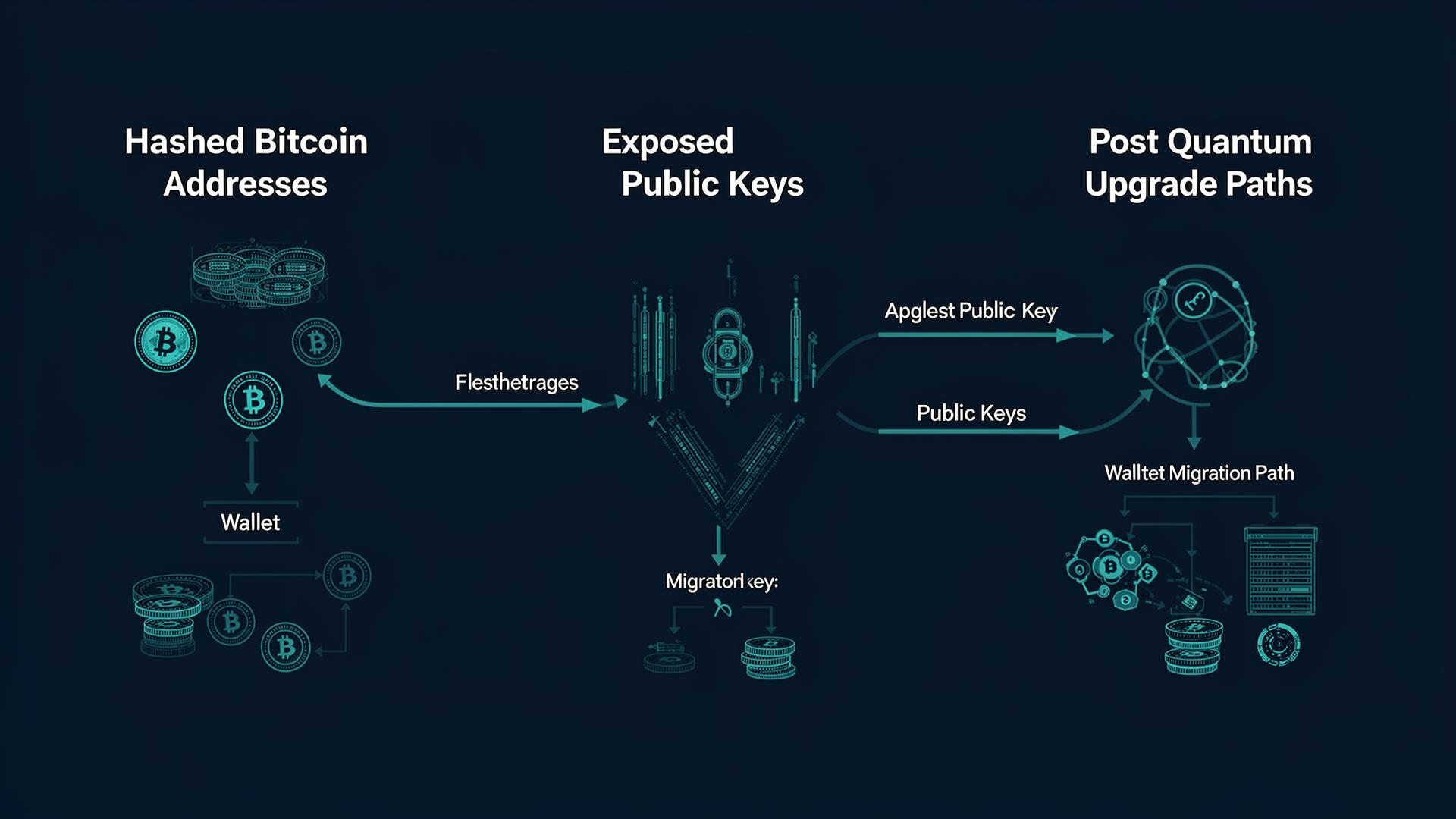
Some Bitcoin outputs are more exposed than others depending on whether the public key has already been revealed on chain. In some wallet patterns, the public key stays hidden behind a hash until coins are spent. In others, the public key may already be visible or may become visible during spending. That means exposure is not one-size-fits-all.
So the risk is not just "Bitcoin yes or no."
It is more like:
- which address type
- whether the public key is exposed
- whether addresses were reused
- whether coins are dormant
- whether the user is paying attention
- whether the wallet software and hardware support migration
That is why simplistic takes usually miss the point.
Why Wallet Migration Is the Real Battlefield
This is the part most headlines miss.
Even if post-quantum cryptography is ready in principle, Bitcoin still has to get real users to move.
That migration challenge includes several layers.
1. User behavior
A large percentage of Bitcoin users are not watching protocol debates every week. Some are long term holders. Some have coins on old devices. Some have not touched their wallets in years. Some do not even know the difference between seed phrases, addresses, and signing methods.
Those people are not going to migrate cleanly just because developers say so.
2. Hardware wallet limitations
Many people assume hardware wallets automatically solve everything because they keep keys offline. That is not the same thing as being post-quantum ready.
A hardware wallet is only as future-proof as the cryptography and firmware it can support. If new post-quantum signatures require different resource profiles, larger signatures, or different secure element assumptions, some current devices may need major upgrades or full replacement.
That becomes a huge market event and a huge security event at the same time.
3. Network throughput
If millions of users all decide they need to move coins in a compressed time window, Bitcoin's limited throughput becomes part of the problem.
Migration sounds simple until everyone tries to do it together.
4. Dormant and lost coins
What happens to coins that cannot migrate?
This is one of the hardest and most uncomfortable questions in the whole debate.
If old or lost coins remain vulnerable forever, then one day they may become quantum loot. If they are burned, frozen, or treated differently by a future rule change, that opens an entirely new political war inside Bitcoin.
That is not a side issue. That is one of the core issues.
What About Hardware Wallets?
This deserves its own section because a lot of readers will come here with one practical question:
"Do I need a new wallet?"
Today, probably not.
But that is not the same as saying current hardware wallets are ready for the full post-quantum era.
Here is the practical way to think about it.
Hardware wallets are excellent at protecting against:
- malware on your computer
- phishing around signing flows
- private key leakage
- accidental exposure through hot wallet habits
They are not a magical solution to:
- future cryptographic obsolescence
- protocol level migration complexity
- signature scheme changes that require different support
- address exposure that already exists on chain
So a hardware wallet still makes sense today. In fact, for most people it remains part of good security hygiene. But investors should stop assuming that "offline" automatically means "quantum safe."
That is not how this works.
If this topic matters to you, read our guides on Best Crypto Wallets in 2026 and the Crypto Wallet Picker Tool to understand the current wallet landscape and how to choose better custody setups today.
Could Bitcoin Need a Hard Fork?
Maybe. And this is where the debate gets politically difficult.
Some changes can be introduced more softly than others, but a meaningful post-quantum transition could still create a fight over what Bitcoin should become and how forcefully the network should move inactive or vulnerable coins.
There are really two different hard fork conversations people mix together.
The first is technical: does Bitcoin need a rule change that requires broad software upgrades?
The second is social: if some people reject the new rules, do we effectively end up with two different versions of Bitcoin?
Those are not the same thing, but both matter here.
The social question is the scarier one.
Bitcoin is famous for moving slowly. That is often a strength. But when a risk requires mass coordination, slow consensus can become a weakness.
If the community cannot agree on how to handle vulnerable old outputs, exposed keys, or dormant coins, then the migration could be messy even before the first real quantum attack is possible.
That is one reason the "there is still time" camp does not fully settle the argument for me.
Time only helps if it is used.
Is This Just Another Crypto Narrative?
Partly, yes.
Crypto is very good at taking real technical developments and turning them into exaggerated market theater. That is happening here too. Some projects will absolutely use "quantum resistant" as a marketing slogan long before they prove anything meaningful.
So skepticism is healthy.
But skepticism should cut both ways.
It should make you skeptical of hype from projects claiming to have solved everything, and it should also make you skeptical of overly comfortable dismissals from people assuming Bitcoin can just patch this later with no drama.
The balanced position is this:
- no immediate panic
- no lazy complacency
- no blind trust in marketing claims
- no assumption that migration will somehow take care of itself
That is the mature view.
What Smart Bitcoin Holders Should Do Right Now
You do not need to panic sell Bitcoin because of quantum computing. But you should tighten up your operational habits.
Here is the practical checklist.
Use modern wallet practices
Avoid sloppy address reuse where possible. Clean wallet hygiene matters because on-chain exposure patterns matter.
Review your custody setup
If you are holding meaningful size, understand exactly what wallet type you are using and why. Do not just assume your setup is secure because a brand is popular.
Stay informed on upgrade paths
Post-quantum discussions are going to become more important, not less. Follow serious researchers, wallet developers, and protocol debates instead of relying on random clips and panic threads.
Be careful with dormant assumptions
If you have old wallets, old backups, or legacy setups, now is a good time to organize them. The more disorganized your Bitcoin storage is, the harder future migration becomes.
Think in years, not headlines
This is not about tomorrow's price candle. It is about long range network resilience.
That is the frame serious investors should use.
Adam Back Is Probably Right About Timing, But Maybe Wrong About Comfort
This is the most honest conclusion I can give.
Adam Back is probably right that the quantum threat is not immediate. Current hardware is still nowhere near the point where Bitcoin holders should think the game is over.
But he may still be wrong if that calm framing makes people underestimate the real problem, which is coordination.
Bitcoin does not just need a future fix. It needs a migration story that works across wallets, users, exchanges, lost coins, exposed keys, and social consensus.
That is a much bigger challenge than "can a quantum machine break secp256k1 today?"
So if the question is whether Bitcoin is safe from quantum computers, my answer is:
Bitcoin is safe enough today to avoid panic.
Bitcoin is not safe enough to justify passivity.
And that middle ground is exactly where serious preparation should happen.
Video: Watch the Discussion
If you want the interview angle that helped inspire this article, watch this discussion here:
You can also follow more crypto analysis, interviews, and market commentary on The Crypto Factor YouTube channel.
About the Guest
Shai (Deshe) Wyborski holds a PhD in quantum cryptography and is one of the co-authors of the GhostDAG protocol. He is a former proof of work researcher and is widely known in the crypto space for his contributions to Kaspa. His academic background and hands-on protocol experience make him one of the more credible voices in the intersection of quantum computing and blockchain security. You can follow Shai on X for ongoing research commentary and technical analysis.

Final Thoughts
Quantum computing is not the first threat Bitcoin has faced, and it will not be the last. The network has survived exchange blowups, regulatory pressure, bear markets, custody failures, and more bad narratives than most people can count.
But quantum risk is different in one important way.
It is not just a price story. It is an infrastructure story.
That means the winners in this conversation will not be the loudest people on social media. It will be the developers, wallet providers, researchers, and users who treat the issue seriously before urgency turns into chaos.
If you want a broader Bitcoin sentiment companion piece, read Is Bitcoin Dead?. If you want a practical wallet angle, start with Best Crypto Wallets in 2026 and the Crypto Wallet Picker Tool.
For more tools and related resources, visit the Crypto Tools & Tech hub.
---
FAQ
Is Bitcoin currently vulnerable to quantum computers?
Not in a practical real-world sense today. There is no known quantum computer currently capable of breaking Bitcoin's signature system at scale. The issue is that future progress could compress the timeline faster than many investors expect, which means preparation matters before the threat becomes practical.
Is Adam Back wrong about Bitcoin and quantum risk?
He is not obviously wrong about the threat not being immediate. Where critics push back is on whether that calm framing underestimates the migration problem. The bigger risk may be social and operational coordination rather than tomorrow's hardware.
Are hardware wallets quantum safe?
Not automatically. Hardware wallets are useful for protecting private keys from normal attacks, but that does not mean they are ready for a future post-quantum transition. Some devices may need major updates or replacement depending on how new signing standards are implemented.
Could quantum computers steal dormant Bitcoin?
Potentially, yes, depending on how exposed the relevant public keys are and how future attack capabilities develop. Dormant coins and old wallet formats are a big part of why this issue is so politically and technically difficult.
Will Bitcoin need a hard fork for post-quantum security?
It might. At minimum, meaningful protocol changes and wallet support changes may be required. Whether that becomes a clean upgrade or a bigger social split depends on how the community handles the transition and what it decides to do about vulnerable older coins.
---
About the Author
Paul Democritou is a crypto educator, keynote speaker, and Web3 marketing strategist. He is the creator of The Crypto Factor, a platform that covers crypto investing, macro analysis, and the future of money. Follow his work on YouTube and X.