
Summary
Most people misunderstand what a crypto bear market actually is.
They think it is just a big price drop. It is not.
A crypto bear market is about structure, time, and psychology. Prices can drop 40 percent in a bull market and still be bullish. At the same time, markets can move sideways and quietly destroy portfolios.
In this guide, I will break down what a crypto bear market really is, how to identify it, and why most traders get it wrong.
---
Quick Answer
A crypto bear market is a period where market structure breaks to the downside and fails to recover, leading to lower highs and lower lows over time. Unlike stocks, crypto can drop 40 to 50 percent during a bull market, so a bear market is not defined by percentage drops but by structural breakdown and prolonged weakness.
---
Direct Answer
A crypto bear market is defined by a breakdown in market structure, not just price declines. When key support levels fail and the market begins forming lower highs and lower lows, the trend shifts bearish.
Unlike traditional markets, crypto is highly volatile. Bitcoin can drop 40 to 50 percent during a bull market without entering a bear market. What matters is whether the market can recover and maintain structure.
Bear markets in crypto are often characterized by long periods of sideways movement, declining interest, and psychological fatigue. This is where most investors lose, not during the initial drop, but during the extended stagnation.
Understanding structure, cycles, and investor psychology is critical to navigating crypto markets successfully.
---
Watch the Full Breakdown
---
Table of Contents
- What Is a Crypto Bear Market?
- Why Crypto Is Different From Stock Markets
- What Actually Defines a Bear Market in Crypto
- What Does Breaking Structure Actually Mean?
- Why Most People Get This Wrong
- Bull Markets Inside Bear Markets
- The Four Year Cycle Still Matters
- The Real Danger of Bear Markets
- Psychology: The Part Nobody Talks About
- Can a Bear Market Happen Without Big Drops?
- When Does a Bear Market End?
- Tools I Use to Navigate These Markets
---
What Is a Crypto Bear Market?
A crypto bear market is a sustained period where:
- Market structure breaks to the downside
- Prices fail to reclaim previous highs
- Lower highs and lower lows form consistently
- Momentum and volume weaken over time
It is not just about price going down. It is about the trend changing.
Most people think:
"Price dropped a lot, so it must be a bear market."
That is wrong.
In crypto, volatility is normal. Large corrections happen even during strong bull markets. A 30 percent pullback in Bitcoin can easily occur in the middle of a bull cycle, and historically those drops have been followed by new all time highs within weeks or months.
What actually defines a bear market is whether the market loses its ability to make new highs and starts producing a clear sequence of lower highs and lower lows that holds over time.
---
Why Crypto Is Different From Stock Markets
In traditional stock markets:
- A 20 percent drop is often considered a bear market
- Some definitions extend this to 24 or even 30 percent
That works in stocks because volatility is lower and most index moves are slower.
Crypto is completely different.
Bitcoin alone can:
- Drop 30 percent in weeks
- Drop 40 to 50 percent during a bull market
- Still continue higher afterward
This means you cannot use stock market definitions in crypto.
If you do, you will constantly misread the market. You will call tops that are not tops. You will sell into bull market corrections that go on to triple. And you will spend most of the cycle either fearful or confused.
Crypto requires its own framework, and that framework starts with structure.
---
What Actually Defines a Bear Market in Crypto
The real definition comes down to structure.
A bear market begins when:
- Key support levels break
- The market fails to reclaim those levels
- The trend shifts from higher highs to lower highs
This is what traders call a break of market structure.
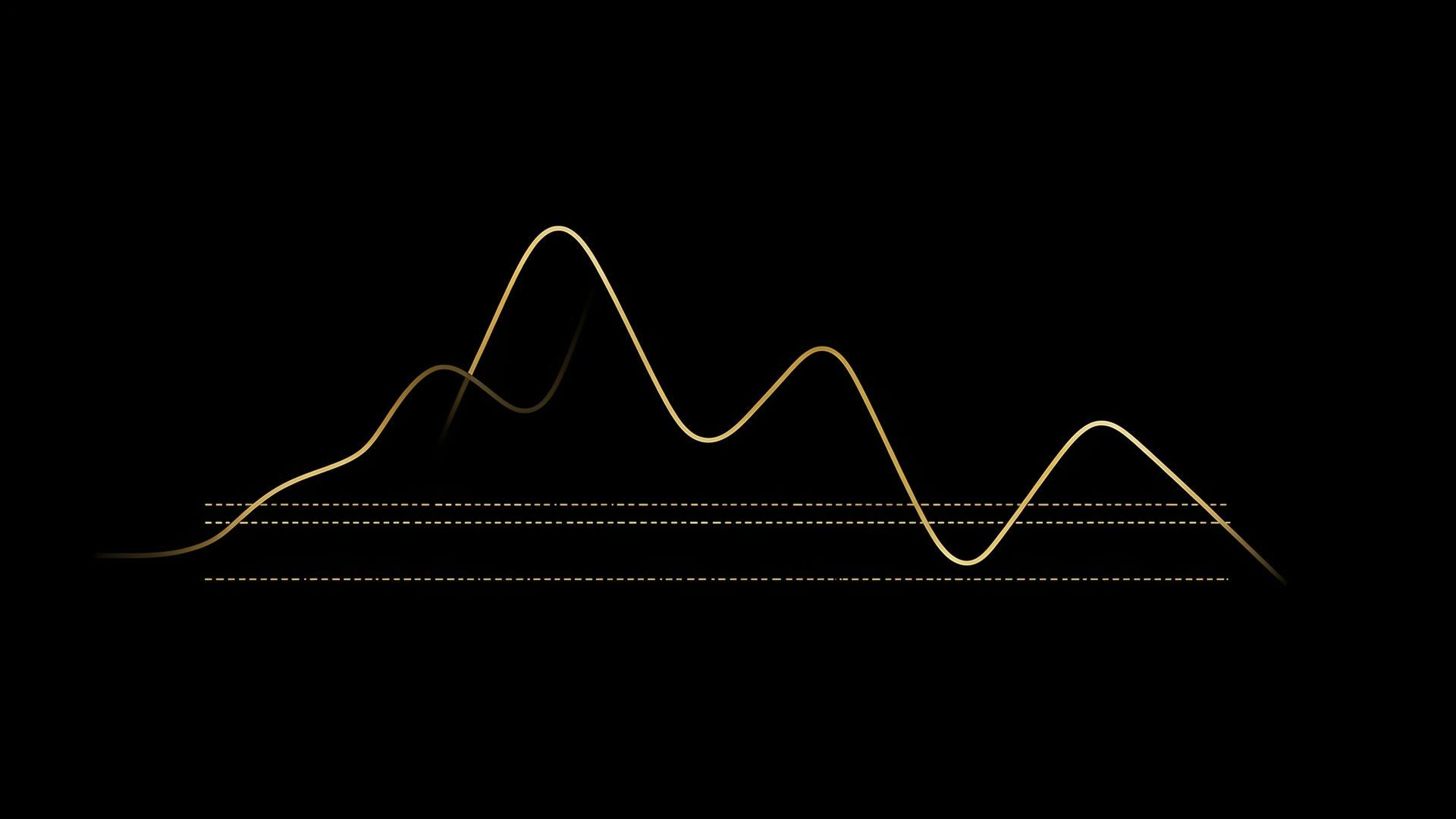
It is not a single candle. It is not a headline. It is a confirmed pattern that price refuses to repair, even after multiple attempts.
---
What Does Breaking Structure Actually Mean?
Breaking structure is one of the most important concepts in trading.
Here is the simple version.
In a bull market, price does this:
- Higher high
- Higher low
- Higher high
- Higher low
That is bullish structure.
A break of structure happens when:
- Price fails to make a higher high
- Then breaks below the previous higher low
That is the moment the trend changes.
The market did not become bearish just because it dropped.
It became bearish when structure broke and stayed broken.
That is the difference, and it is the single concept that separates traders who survive cycles from traders who get repeatedly stopped out.
---
Why Most People Get This Wrong
Most traders focus on:
- Price drops
- Headlines
- Emotions
Instead of structure.
This is why people:
- Call bear markets too early
- Panic sell during bull market corrections
- Miss major rallies
- Capitulate at the exact wrong moment
Understanding structure removes that confusion.
When you watch structure instead of price, you stop reacting to every red candle. You start asking a much more useful question: has the trend actually changed, or is this just noise inside the same trend?
That single question filters out most of the bad decisions investors make in crypto.
---
Bull Markets Inside Bear Markets
This is where things get confusing for most people.
You can have:
- Bull rallies inside bear markets
- Bear pullbacks inside bull markets
These are called:
- Bear market rallies
- Counter trend moves
In crypto, these moves can be huge.
Even in a bear market, you can see:
- 20 percent moves
- 30 percent moves
- 40 percent rallies
That is why traders who understand this still make money. They are not betting on the long term direction during these moves. They are trading the structure of the smaller move while respecting the bigger one.
It is also why so many people get trapped. A 40 percent rally inside a bear market feels exactly like the start of a new bull cycle. The only thing that tells you it is not is structure.
---
The Four Year Cycle Still Matters
Crypto historically follows a four year cycle:
- Accumulation
- Bull market
- Distribution
- Bear market
Within that cycle:
- Bear markets typically last around a year
- But rallies can happen inside them
- And the cycle is shaped by liquidity, halving events, and macro conditions
This is why timing and structure matter more than labels. Saying "we are in a bear market" tells you nothing actionable. Knowing where you are inside the cycle, and whether structure supports continuation or reversal, is what actually drives decisions.
If you want a deeper view of how AI and liquidity are reshaping this cycle specifically, read AI and the last crypto cycle.
---
The Real Danger of Bear Markets
Most people think the danger is price dropping.
It is not.
The real danger is time.
Bear markets often:
- Move sideways
- Stay at lows for long periods
- Slowly drain interest and capital
This is what destroys portfolios.
You can survive a 70 percent drawdown if you have conviction and a plan. What most investors cannot survive is two years of nothing happening, where every rally fails, every breakout traps buyers, and every "this is the bottom" call gets invalidated.
If you want to understand this deeper, read why sideways crypto markets are more dangerous than crashes.
---
Psychology: The Part Nobody Talks About
This is where most people fail.
In bull markets:
- You have excitement
- You have volatility
- You have dopamine
In bear markets:
- That disappears
- There is no action
- There is no recovery feeling
This leads to:
- Frustration
- Capitulation
- Quitting the market
This is why people think crypto is dead during every cycle. The same headlines repeat. The same influencers disappear. The same retail investors swear they are done.
You can see this exact pattern documented here: is crypto dead?
The investors who win the next cycle are almost always the ones who survived this psychological phase without selling out of frustration.
For a deeper breakdown of the practical rules I follow during these conditions, watch my video Never Buy in a Bear Market: 12 Unconventional Crypto Rules for Success.
---
Can a Bear Market Happen Without Big Drops?
Yes.
This is something most people do not understand.
A market can:
- Move sideways for months
- Stay below resistance
- Slowly lose momentum
And still be a bear market.
In many cases, this is worse than a crash.
Because:
- Projects lose relevance
- Narratives change
- Investors lose interest
- Liquidity quietly leaves the system
A clean 60 percent crash often signals capitulation and an eventual bottom. A slow drift sideways can quietly chew through a portfolio for a year while the investor convinces themselves "nothing is really happening."
That is the bear market that breaks people.
---
When Does a Bear Market End?
A bear market ends when:
- Structure flips back to bullish
- Key resistance becomes support
- Higher highs start forming again
- Volume returns to upside breakouts
In simple terms:
- The trend must reverse
- And hold that reversal
Until then, rallies are just rallies.
The investors who catch the next bull cycle early are not the ones who guess the bottom. They are the ones who recognise the moment structure flips and act on confirmation rather than hope.
For a practical framework on how to operate in these conditions without blowing up your portfolio, read the crypto bear market survival guide.
---
Tools I Use to Navigate These Markets
Personally, I rely on:
- Structure
- Momentum
- Volume
And my own system, refined over multiple cycles since 2017.
If you want to learn how I analyze markets, identify structure shifts, and make decisions during both bull and bear conditions, that is exactly what I teach inside The Crypto Factor course, backed by my own proprietary indicator, The Factor Line.
---
Conclusion
A crypto bear market is not just a price drop.
It is a structural shift in the market.
If you understand:
- Structure
- Cycles
- Psychology
You will avoid most of the mistakes people make.
And more importantly, you will know when opportunity is actually present, instead of reacting to every headline and every red candle as if the world is ending.
---
FAQ
What percentage drop defines a crypto bear market?
There is no fixed percentage. Crypto can drop 40 to 50 percent in a bull market. Bear markets are defined by structure, not percentage declines.
What is a break of structure in crypto?
A break of structure happens when price stops making higher highs and higher lows, then breaks below a key previous higher low. This signals that the trend may be shifting from bullish to bearish.
Can crypto have bull markets during a bear market?
Yes. Crypto can have strong rallies inside larger bear markets. These are often called bear market rallies and can still move 20 to 40 percent or more.
Why are crypto bear markets dangerous?
Crypto bear markets are dangerous because of time, not only price. Long sideways periods can drain confidence, destroy investor psychology, and make projects lose relevance.
How long do crypto bear markets last?
Crypto bear markets often last around a year within the broader four year cycle, but the length can vary depending on market structure, liquidity, macro conditions, and investor behavior.
Is a 30 percent Bitcoin drop always a bear market?
No. Bitcoin can fall 30, 40, or even 50 percent during a bull market and still remain structurally bullish if key higher lows hold and the broader trend remains intact.
---
About the Author
Paul Democritou is a crypto educator, keynote speaker, and Web3 marketing strategist. He is the creator of The Crypto Factor, a platform that covers crypto investing, macro analysis, and the future of money. Follow his work on YouTube and X.