
Summary
Most people think bear markets are where you buy.
They are not.
Bear markets are where most people lose money, lose conviction, and disappear completely from crypto.
But if you understand how they actually work, a bear market becomes your biggest advantage.
This guide breaks down 12 real rules based on experience since 2017 so you can survive, stay sharp, and position yourself before the next cycle begins.
Download the Bear Market Rules PDF
---
Quick Answer
A crypto bear market survival guide focuses on preserving capital, avoiding emotional mistakes, and positioning for the next cycle. Instead of blindly buying dips, investors should wait for confirmation, follow narratives, manage risk, and prioritize survival over activity.
---
Watch the Full Breakdown
---
Table of Contents
- Rule 1: Never Buy Deep Inside a Bear Market
- Rule 2: Time Is More Dangerous Than Price
- Rule 3: Scale In and Scale Out
- Rule 4: Stop Blindly Buying the Dip
- Rule 5: The Bigger the Range, the Bigger the Move
- Rule 6: If It Needs Hype to Survive, It Will Die
- Rule 7: Bitcoin First, Quality Second, Garbage Never
- Rule 8: Cash Is a Position
- Rule 9: Never Trade the News
- Rule 10: Take Profits Faster
- Rule 11: Avoid Constant Action
- Rule 12: Use the Bear Market to Level Up
- Key Narratives to Watch Next Cycle
- Tools I Personally Use
---
Rule 1: Never Buy Deep Inside a Bear Market
Everyone says the bear market is the best time to buy.
It sounds smart. It sounds logical. It is also dangerous.
Bear markets are long and unpredictable.
During this time:
- projects fail
- narratives die
- regulations hit
- liquidity disappears
If you buy too early, your capital is locked in the wrong place while the real opportunities are still forming.
The correct approach is simple:
Wait for strength.
You do not need the bottom. The real money is made in the middle of the move, not at the bottom.
Think about 2022. Bitcoin dropped from 69K to 15K over months. Anyone who bought at 40K thinking it was a deal watched their position bleed for another year. They were right about Bitcoin long term but wrong about timing, and that destroyed their ability to act when the real recovery started.
This matters because capital is finite. If you deploy too early, you cannot redeploy later when confirmation appears. The cost of being early in a bear market is not just unrealized loss. It is missed opportunity.
If you ignore this rule, you end up fully invested at the worst time with no flexibility to respond when the market actually turns.
---
Rule 2: Time Is More Dangerous Than Price
A 50 percent drop will not destroy you.
Time will.
When the market stays flat for months:
- motivation disappears
- conviction fades
- emotions take over
This is exactly why sideways markets are so dangerous.
Read this breakdown: Why sideways markets are the silent portfolio killer
In 2018 and 2019, Bitcoin spent over a year trading between 3K and 4K. Most people did not sell at the crash. They sold during the boredom. The slow grind of nothing happening made them question everything they believed.
Sideways markets drain conviction quietly. There is no dramatic crash to react to. There is just silence, and silence is harder to survive than volatility.
If you underestimate the time component, you will make emotional decisions months into the grind. You will sell right before the move starts because you ran out of patience, not capital.
---
Rule 3: Scale In and Scale Out
Never go all in on one entry.
Professional traders think in ranges, not single buys.
Instead:
- enter partial positions
- keep liquidity ready
- adjust as structure evolves
This removes pressure and gives you flexibility.
Imagine you want exposure to Ethereum at 1,500 dollars. Instead of buying the full position at once, you enter 25 percent at 1,500, another 25 percent at 1,300, and hold the rest until structure confirms direction. If it drops to 1,100, you still have capital. If it bounces from 1,400, you already have exposure.
This approach matters because it removes the emotional pressure of needing to be right on a single price. Markets rarely move in straight lines, and scaling gives you room to adjust without panic.
If you go all in on one entry and the price drops another 30 percent, you are stuck with a losing position and zero flexibility. That is how accounts get destroyed in bear markets.
---
Rule 4: Stop Blindly Buying the Dip
Buying the dip without context is one of the worst habits in crypto.
Think like a business.
If demand shifts, you do not keep buying inventory that nobody wants.
In crypto: narrative beats price. Always.
Consider the dozens of altcoins from 2021 that dropped 90 percent and never recovered. People kept buying the dip on projects with no users, no revenue, and no real adoption. The price was cheap but the narrative was dead. Cheap does not mean valuable.
This matters because every dollar you spend on a dying narrative is a dollar you cannot spend on the next real opportunity. The market does not reward loyalty to failing projects. It rewards conviction in the right direction at the right time.
If you ignore this rule, you end up averaging into positions that never recover while the assets that actually matter move without you. It is one of the most common reasons people question whether crypto is even worth it anymore.
---
Rule 5: The Bigger the Range, the Bigger the Move
Bear markets are built on ranges.
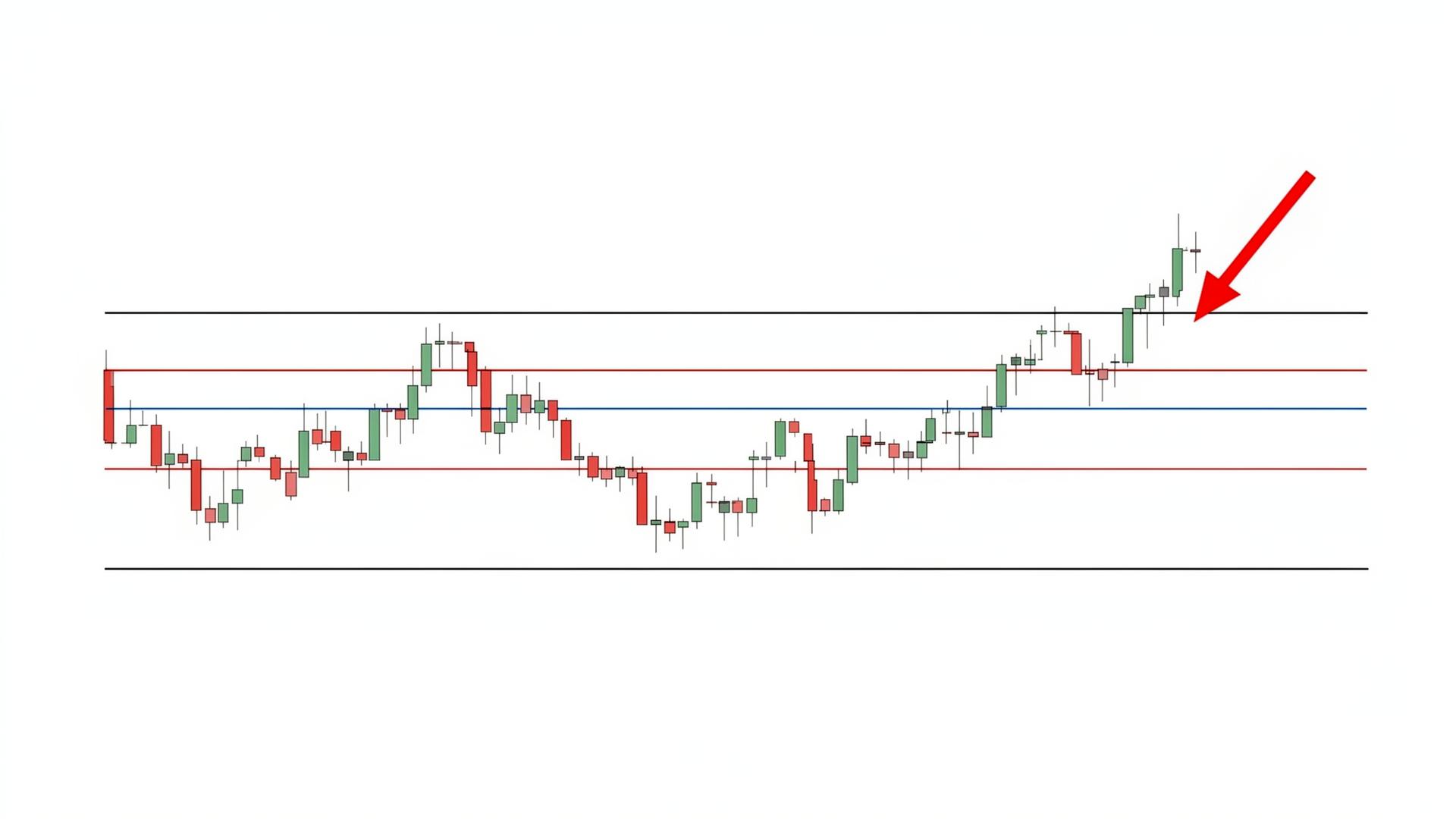
The longer price moves sideways:
- the more pressure builds
- the stronger the breakout
Your job is not to predict.
Your job is to react when structure breaks.
Look at Bitcoin from late 2023 to early 2024. After months of consolidation between 25K and 31K, the breakout above 31K led to a rapid move toward 40K and beyond. That energy was built during the boring sideways phase that most people ignored.
Ranges compress volatility. When that compression finally releases, the move is proportional to the time spent building. This is why patience during the boring phase is not just a virtue. It is the actual edge.
If you get impatient and trade the chop inside a range, you get stopped out repeatedly, lose capital in small cuts, and miss the real move when it finally arrives.
---
Rule 6: If It Needs Hype to Survive, It Will Die
Hype disappears first in a bear market.
If a project depends on:
- influencers
- marketing noise
- short-term attention
It will struggle.
Focus on:
- utility
- adoption
- narrative strength
Think about every meme coin or influencer-backed token from 2021. Most of them lost 95 percent or more and never recovered. The ones that survived were the ones with actual use cases, growing developer communities, or integration into real infrastructure.
This rule matters because bear markets are filters. They remove everything that was held up by attention alone. What remains is what has genuine demand, and that is where you want your capital when the next cycle begins.
If you hold projects that depend on hype, you will watch them slowly fade to irrelevance while real narratives like AI integration, perpetual DEXs, and payment infrastructure gain traction quietly in the background.
---
Rule 7: Bitcoin First, Quality Second, Garbage Never
If you must be active:
- Bitcoin first
- Large caps second
- Everything else is high risk
Most low-quality coins will not recover.
In every bear market cycle, Bitcoin leads the recovery. It is the first asset institutional money flows into, the first to establish higher lows, and the first to break key resistance levels. Altcoins follow later, and only the strong ones.
This hierarchy matters because risk management in a bear market is about survival. Bitcoin has the deepest liquidity, the broadest adoption, and the highest probability of recovery. Anything below large caps carries exponential risk during downturns.
If you ignore this and chase small caps or micro caps during a bear market, you are gambling with capital that you need to preserve. Most of those tokens will never see their previous highs again, and the opportunity cost of holding them is enormous.
---
Rule 8: Cash Is a Position
This is where most people get it wrong.
Cash is not wasted.
Cash gives you:
- freedom
- flexibility
- opportunity
Without cash, you cannot move when real opportunities appear.
During the 2022 collapse, anyone holding 50 percent or more in stablecoins had the ability to deploy capital at generational lows. Those who were fully invested had nothing left. They could see the opportunity but could not act on it.
Cash matters because it is optionality. In a market where timing and flexibility determine returns, the ability to move fast when structure confirms is worth more than any early position that might not work out.
If you stay fully invested through a bear market, you give up your most powerful tool. You become a passive holder instead of an active strategist, and that difference compounds over time.
---
Rule 9: Never Trade the News
There are two types of news:
- news for insiders
- news for the public
You only get the second one.
By the time you react, the move is already done.
Focus on:
- structure
- price action
- behavior
Consider how often a major announcement causes a spike that reverses within hours. Regulatory news, exchange listings, partnership announcements. By the time it hits your feed, the informed money has already positioned. You are the exit liquidity.
This matters because news-based trading in crypto has one of the worst success rates of any approach. The market moves before headlines, not after them. Structure and price action tell you what money is doing. News tells you what money already did.
If you trade every headline, you will enter late, get caught in reversals, and slowly bleed capital through a series of trades that feel logical but consistently fail.
---
Rule 10: Take Profits Faster
In a bear market:
- moves are shorter
- reversals are faster
Take profits at resistance.
If price continues higher, you can always re-enter.
Protect capital first.
In a bull market, a 20 percent move might be the start of a larger trend. In a bear market, a 20 percent move is often the entire move. If you hold through it expecting continuation, you give back the gain and often end up worse than where you started.
This matters because bear market rallies are designed to trap people. They create the illusion of recovery just long enough to pull in buyers, then reverse hard. Taking profits at known resistance levels protects you from this pattern.
If you hold through every rally expecting a trend change, you will ride gains up and back down repeatedly. Each cycle of hope and disappointment erodes both your capital and your confidence.
---
Rule 11: Avoid Constant Action
Most traders lose because they cannot sit still.
They need action.
They chase movement.
That is dopamine.
Your job is not to trade constantly.
Your job is:
- to survive
- to observe
- to wait
Look at professional traders during bear markets. Most of them dramatically reduce their trade frequency. They might take one or two setups per month instead of five per week. Their edge comes from selectivity, not volume.
This matters because every trade in a bear market carries higher risk. Spreads are wider, liquidity is thinner, and false signals are more common. The cost of being wrong is amplified, which means the cost of unnecessary action is amplified too.
If you trade constantly to satisfy the need for action, you will slowly drain your account through fees, bad entries, and emotional decisions. The traders who survive bear markets are the ones who learn to do nothing for long stretches.
---
Rule 12: Use the Bear Market to Level Up
This is where the real advantage is built.
Bear markets are for:
- learning technical analysis
- understanding narratives
- building systems
If you improve while others quit, you win by default.
Use this time to study how ranges form and break. Learn to read volume, understand market structure, and identify which narratives have genuine adoption versus manufactured attention. The knowledge you build now compounds when the next cycle arrives.
This matters because every major success story in crypto started with someone who used the quiet period to prepare. They did not get lucky. They were ready when the opportunity appeared, and readiness is a skill you build during bear markets.
If you coast through the bear market without learning anything, you will enter the next cycle with the same mistakes, the same emotional patterns, and the same results. The people who level up during the downturn are the ones who outperform when the market returns.
---
Common Bear Market Mistakes
- Overtrading due to boredom. The market is quiet, so you create action where none exists. Every unnecessary trade costs fees, emotional energy, and usually capital. The urge to do something is the most expensive habit in crypto.
- Blindly buying dips without context. A lower price does not mean better value. If the narrative is dead, the project is dead. Buying the dip on a failing asset is not investing. It is averaging into a loss.
- Following hype narratives into bear market rallies. Influencers and social media will promote tokens during temporary bounces. These rallies trap late buyers and reverse fast. If the conviction behind a move is social media noise, it is not real.
- Ignoring opportunity cost. Every dollar locked in a bleeding position is a dollar that cannot be deployed into the next real opportunity. Holding a losing trade because you do not want to realize a loss costs more than the loss itself over time.
- Not holding cash. The single biggest mistake in any bear market. Without cash, you cannot act when structure confirms. You become a spectator watching opportunities pass because you deployed everything too early.
- Refusing to admit the market has changed. Some people keep running bull market strategies in a bear market. They take large positions, hold through pullbacks, and refuse to scale out. The market does not care about your previous strategy. Adapt or bleed.
---
How to Position for the Next Bull Run
The next cycle will reward the people who prepared during the downturn. Not the ones who predicted the bottom. Not the ones who traded every bounce. The ones who built clarity, preserved capital, and positioned with discipline.
- Track emerging narratives early. The biggest winners of each cycle are visible during the bear market if you know where to look. AI integration, perpetual DEX infrastructure, and payment protocols like X402 are examples of narratives building momentum right now.
- Focus on strength, not weakness. When the market turns, the assets that recover first and fastest are the ones worth owning. Do not try to rescue dead positions. Watch for what leads.
- Build watchlists instead of forcing trades. Create a short list of assets with strong fundamentals, growing adoption, and clear narrative alignment. Monitor them. Do not buy them yet. Wait for confirmation.
- Keep liquidity ready. Cash and stablecoins are your ammunition. The best opportunities in crypto appear fast and do not wait for people who are fully deployed. Having 40 to 60 percent of your portfolio in liquid positions gives you the ability to act when it matters.
- Wait for confirmation, not predictions. Nobody knows the exact bottom. You do not need it. Wait for structure to confirm direction. Higher lows, volume increases, narrative momentum. These are the signals that matter, not opinions on social media.
The people who win the next cycle will not be the ones who guessed correctly. They will be the ones who stayed patient, stayed liquid, and moved when the market gave them a reason to. If you are reading this during a market that feels dead, understand that the preparation you do now is the most valuable work you can do.
---
Key Narratives to Watch Next Cycle
Pay attention to:
- Perpetual DEXs
- AI and crypto integration
- Payment infrastructure like X402
Full breakdown: AI, Perpetual DEXs, and the Narratives Shaping Crypto in 2026
---
Tools I Personally Use
If you want to go deeper into strategy and execution, this is the system I use to analyze markets, identify ranges, and manage entries and exits.
Explore The Crypto Factor Course
---
Related Articles
- Is crypto dead or just misunderstood?
- Why sideways markets destroy portfolios
- Bitcoin chart is lying: what the data really says
---
Final Thoughts
The bear market is not where you win.
It is where you prepare to win.
Most people will disappear before the next cycle.
If you stay disciplined, protect capital, and improve your skills, you do not need to be perfect.
You just need to still be here when the opportunity comes.
Survival beats perfection. Discipline beats hype. Preparation beats prediction. The market does not reward the smartest person in the room. It rewards the person who is still standing when the cycle turns. Everything you do now, every rule you follow, every mistake you avoid, compounds into an advantage that most participants will never have because they quit too early.
---
Download the Full Checklist
---
FAQ
What is a crypto bear market?
A long period of declining or sideways prices with low liquidity.
Should I invest during a bear market?
It is better to wait for confirmation rather than buying blindly.
What is the biggest mistake in bear markets?
Overtrading and buying without understanding narratives.
Why is cash important?
Cash provides flexibility and opportunity.
How to prepare for a bull run?
Learn, wait, and position early.
---
About the Author
Paul Democritou is a crypto educator, keynote speaker, and Web3 marketing strategist. He is the creator of The Crypto Factor, a platform that covers crypto investing, macro analysis, and the future of money. Follow his work on YouTube and X.